If you live in Ocala or nearby areas, understanding types of junk cars can help you make smart decisions. Not all junk cars are the same. They differ by condition, damage, legal status, and market value. Knowing these differences is important for car owners, buyers, and even people curious about junk vehicles. This guide explains every major type of junk car clearly.
Types of Junk Cars by Condition
Non-Running Junk Cars
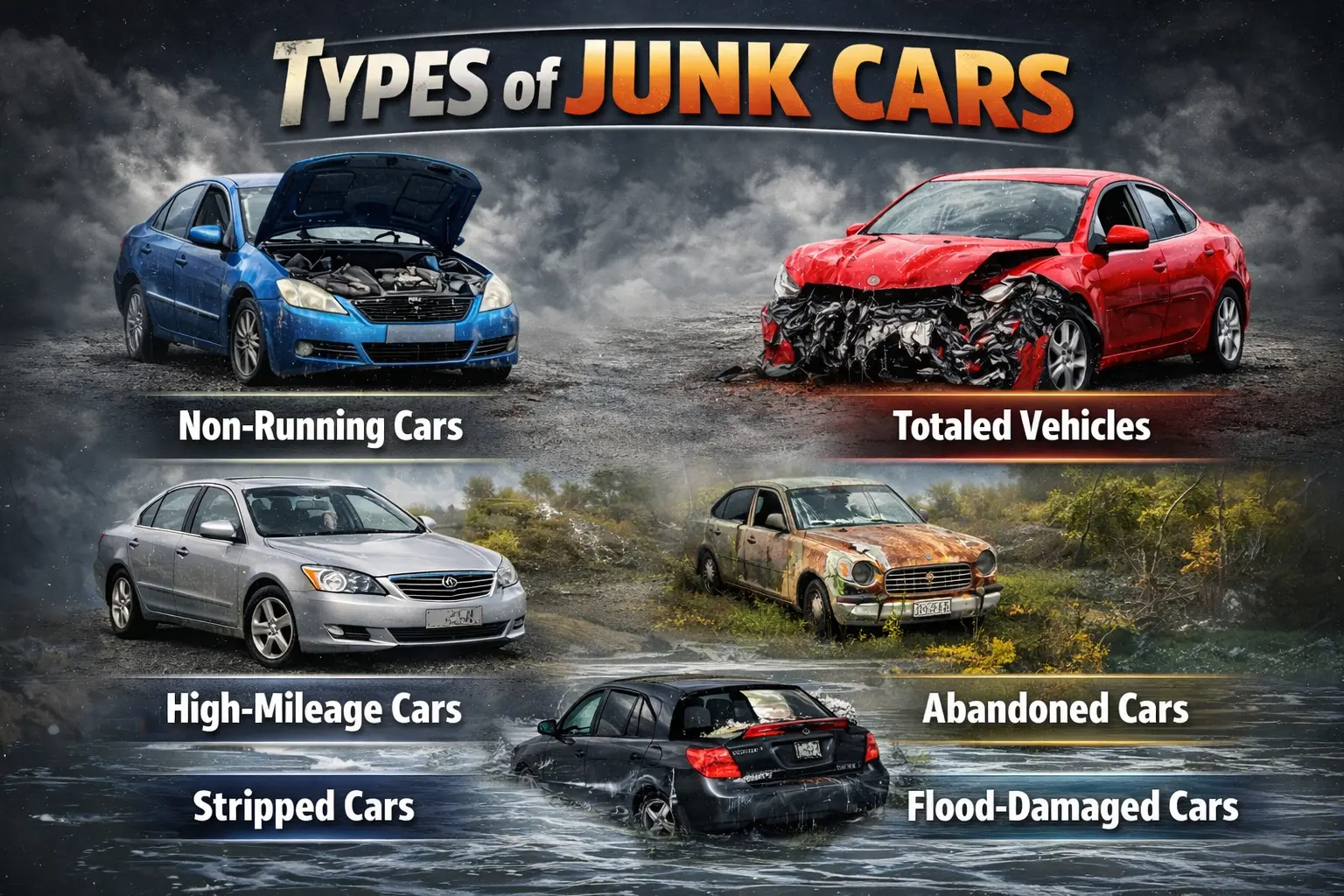
Some junk cars no longer start because of engine or transmission failure. Others have been left unused for months or years. These cars may be drivable with heavy repair but often cost more than their value. Non-running cars are common in local junkyards and often sold for parts.
Totaled or Wrecked Vehicles
A totaled car has severe accident damage or has been declared a total loss by insurance. These vehicles are unsafe to drive and often require scrap or salvage. Understanding total loss and insurance write-offs helps owners know their car’s worth.
High-Mileage Junk Cars
Cars with high mileage usually have worn engines, transmissions, and other components. Repairing these cars is often uneconomical. They are typically sold to junk car buyers for metal recycling or parts resale.
Abandoned or Unused Vehicles
Some cars are left unused or abandoned. Owners may lose interest, or vehicles may be unclaimed. These vehicles often enter local salvage yards for recycling.
Incomplete or Stripped Vehicles
Cars missing major parts like doors, tires, or engines are considered incomplete. Junkyards accept these cars because the remaining components can still be valuable.
Water-Damaged or Rusted Cars
Cars exposed to flood or water damage often develop rust and structural issues. Water-damaged cars, frame-damaged vehicles, and rusted cars are commonly found in Ocala junkyards.
Types of Junk Cars by Legal Status
Salvage Cars
Salvage cars have a salvage title or salvage certificate. They are repairable or rebuildable. These vehicles can sometimes return to the road after proper restoration.
Scrap Cars
Scrap cars are not repairable. They are usually sold for scrap metal based on their metal weight. Local junkyards buy these cars to recycle metals safely.
Category A, B, C, and D Cars
Insurance often classifies junk cars into categories. Category A may be severe, while Category D may have minor damage. Understanding these categories helps car owners know what to expect when selling.
Types of Junk Cars by Damage Severity
- Accident-Damaged Cars: Cars with body or structural damage.
- Flood-Damaged Cars: Water-damaged vehicles often beyond repair.
- Fire-Damaged Cars: Severe damage to the engine or body.
- Frame-Damaged Vehicles: Unsafe to drive due to bent or rusted frames.
Types of Junk Cars by Market Value
Low-Value Scrap-Only Cars
People sell these cars mainly for metal recycling. The value depends on weight and market prices.
Parts-Value Junk Cars
Some vehicles have usable components like engines, transmissions, or catalytic converters. Junk car buyers may pay more for these parts.
Repairable Junk Cars
Repairable cars are economical to fix for some buyers, but owners may find repairs cost more than the vehicle’s value.
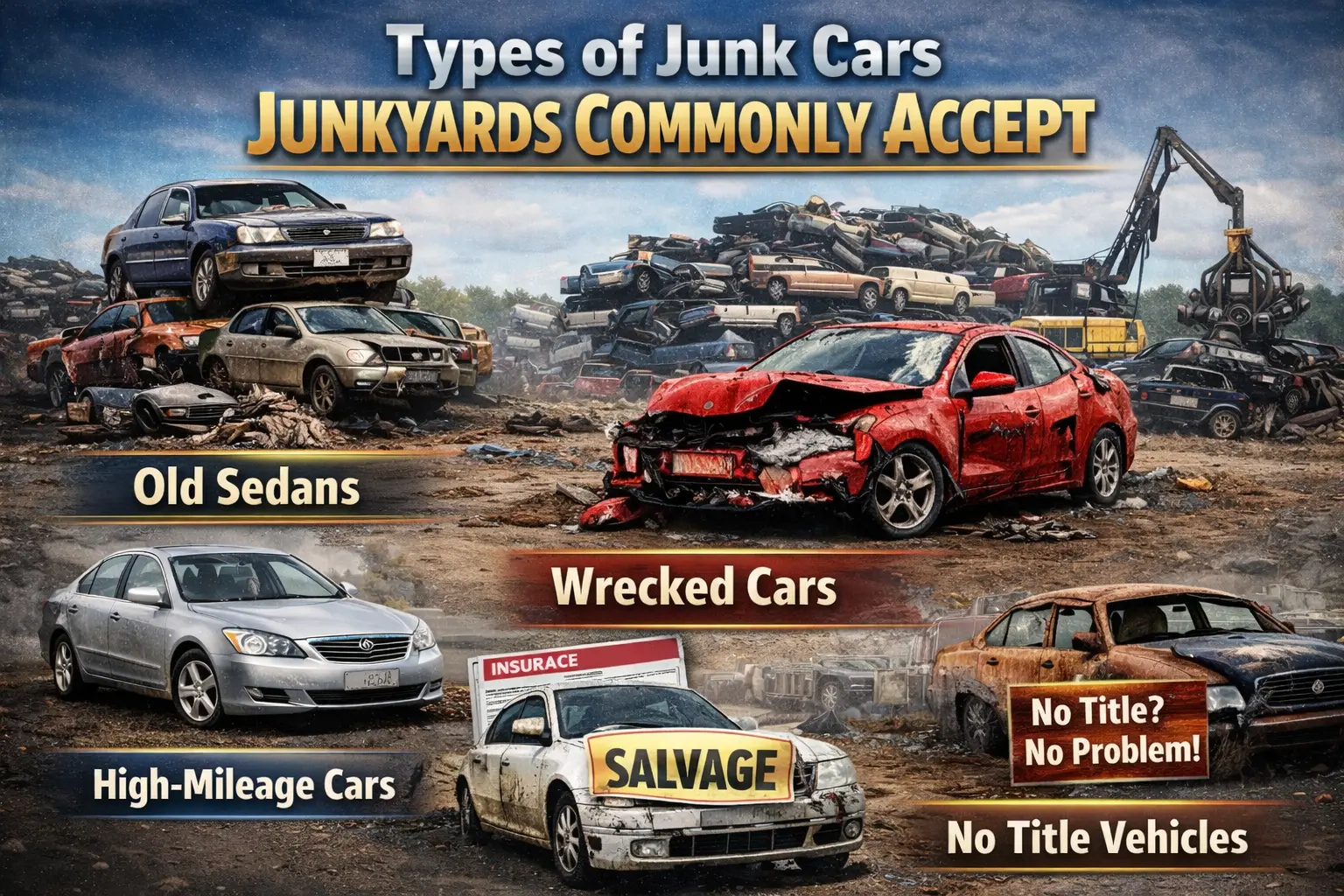
Types of Junk Cars Junkyards Commonly Accept
Most Common Vehicles Found in Junkyards
Local junkyards often see cars like Honda Accords, Ford Tauruses, and Nissan Altimas. Insurance write-offs, abandoned vehicles, and totaled cars are frequent.
Junk Vehicles Accepted With or Without Titles
Some junk car buyers accept cars even without a title. Paperwork status and local vehicle title regulations matter for legal transfers.
Common Names and Terms for Junk Cars
- Junker: A simple term for an old or unusable car.
- Lemon Car: Cars with repeated mechanical failures or defects.
Key Takeaways: Understanding Junk Car Classifications
- Junk cars vary by condition, damage, legal status, and market value.
- Salvage and scrap cars are the most common classifications.
- Non-running, high-mileage, abandoned, stripped, and water-damaged cars are frequent in local junkyards.
Knowing the different types of junk cars ensures that Ocala and surrounding cities like Hernando, Belleview, Inverness, Lady Lake, etc., car owners and buyers can act wisely. This knowledge strengthens trust in local junk car buyers and helps maintain safe and efficient recycling practices.
Frequently Asked Questions
What are the main types of junk cars?
The main types of junk cars include non-running cars, totaled vehicles, high-mileage cars, abandoned cars, stripped vehicles, and water-damaged cars. These vehicles are usually unsafe, unreliable, or too expensive to repair compared to their value.
Can high-mileage vehicles be classified as junk cars?
Yes. High-mileage cars often become junk cars when wear and tear make repairs too costly. Even if they still run, their engine, transmission, or structural condition may no longer justify repair expenses.
Are flood-damaged or rusted cars considered junk cars?
Yes. Flood-damaged and heavily rusted cars are common types of junk cars. Water damage can affect electrical systems and safety, while rust can weaken the vehicle frame, making the car unsafe to drive.
What types of junk cars are most common in junkyards?
The most common junk cars found in junkyards are older sedans, high-mileage vehicles, accident-damaged cars, and insurance write-offs. These cars often enter junkyards for parts reuse or recycling.
Ready to Sell Your Junk Car in Ocala?
If you have a junk car, salvage vehicle, or totaled car sitting unused, you can turn it into cash today. Cash For Junk Cars Ocala buys all types of junk cars, including non-running, high-mileage, flood-damaged, and stripped vehicles. We offer:
- Free pickup in Ocala and the surrounding cities
- Instant cash payment
- Hassle-free paperwork guidance
Contact us today to get a quick quote and sell your junk car safely and locally.