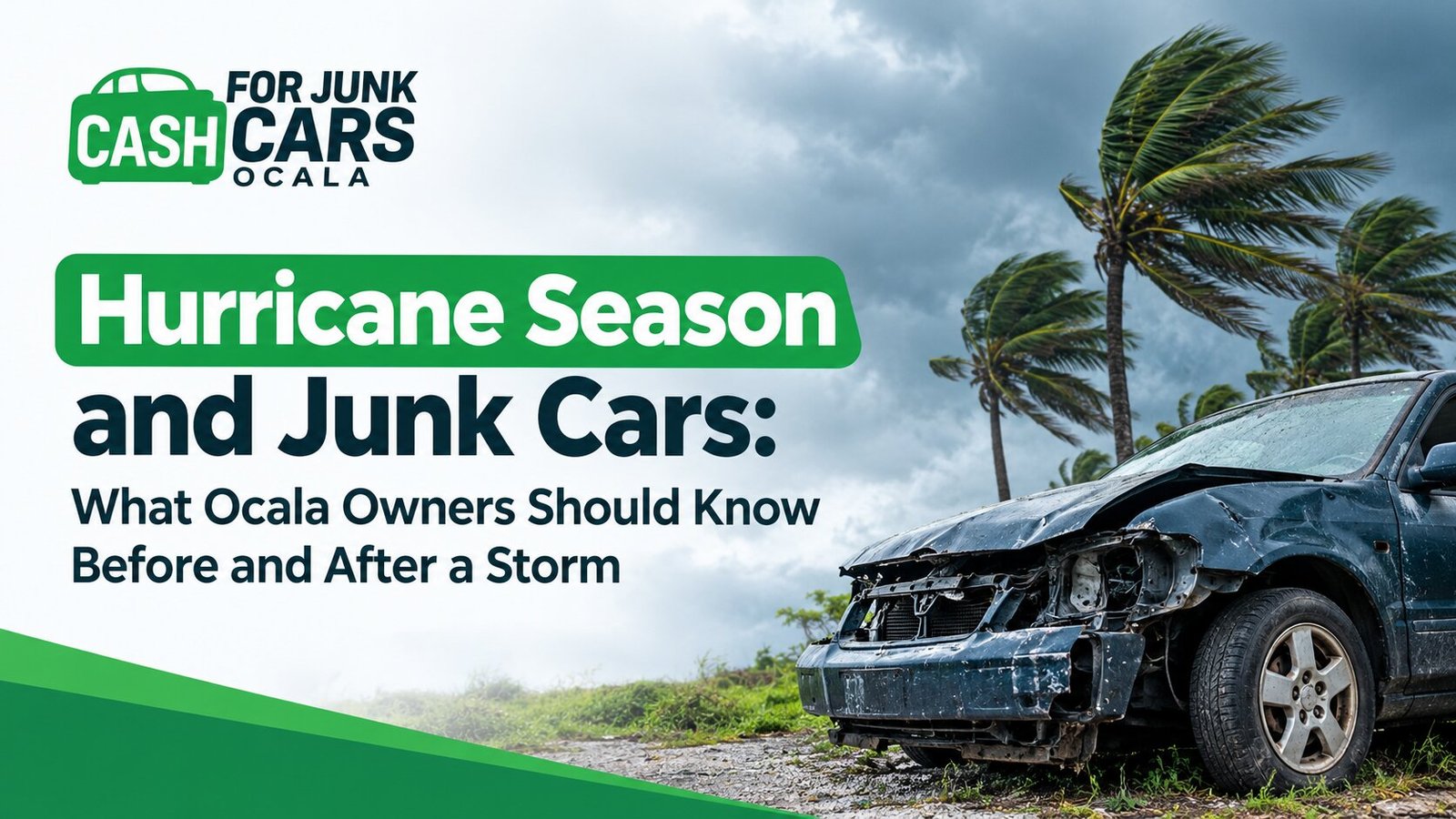
Hurricane season runs from June 1 to November 30. For a lot of car owners, it is also the time of year when an old, unreliable vehicle becomes a real problem. A storm can flood it, drop a limb on it, or leave it stranded in a driveway you need to clear. If you are thinking about getting cash for a junk car around Ocala, the decisions you make in the first few days after damage often matter more than the damage itself.
This guide covers what to do with a flooded or storm-damaged car, what to sort out before you sell, and how to get an old vehicle moved before the next storm.
Why Ocala Owners Should Think About This
Ocala sits inland, so storm surge is not the main concern here. The usual trouble comes from heavy rain, saturated ground, strong winds and falling trees. Low spots, retention areas and roads that collect water can put a parked car in harm’s way even when the storm itself is not a direct hit. Power outages and blocked roads can also leave a non-running car stuck where it is for days.
That last point matters more than most people expect. A car that was already on its last legs before the storm is harder to deal with afterward, because you may not be able to move it, and neither can anyone else without a tow.
How Storms Turn a Rough Car Into a Junk Car
Not every storm-damaged car is finished. Some are, and it helps to know which is which.
Flood damage. Water that reaches the carpet and lower seats has usually reached wiring, connectors and control modules too. Modern cars carry a lot of electronics low in the cabin. A car can look fine and start for a few days, then develop electrical problems, warning lights and a musty smell that will not go away. Repair costs can pass the car’s value quickly.
Tree and debris damage. A crushed roof, broken windshield or bent frame can be more than an older car is worth to repair. Even when the engine is fine, structural damage often makes a repair impractical.
Wind and hail damage. Dents and broken glass alone may not total a car, but combined with high mileage or an existing mechanical problem, they often tip the decision toward selling.
Damage on top of an existing problem. This is a common situation. The car already had a failing transmission or an expired registration, and the storm made a bad situation worse.
What to Do First
If your car took on water or was hit by something, a few simple steps protect you and keep your options open.
- Do not try to start it. Water in the engine can cause serious damage that turns a repairable car into a total loss.
- Take clear photos of the water line, the interior, the damage and the surrounding area before anything is moved.
- Write down the VIN and mileage, and find your title if you can.
- Keep personal items and valuables out of the car.
Call Your Insurance Company Before You Sell
This is the step people skip, and it can be an expensive mistake. If you carry comprehensive coverage, storm and flood damage may be covered. Your insurer may want to inspect the car or handle the disposal itself. If you sell the car first, you can complicate the claim.
Talk to your agent, ask what the policy covers, and ask whether they need the vehicle. If the claim is settled or your policy does not cover the damage, selling to a buyer that takes damaged vehicles is a practical way to clear it out. If you are unsure how the overall process works, this walkthrough of selling a junk car in Ocala covers the basics from start to finish.
Can a Flooded or Damaged Car Still Be Sold?
Often, yes. A vehicle does not need to run to have value.
A buyer looks at what the car is made of and what is still usable. Metal has scrap value. Some parts higher up in the vehicle, such as body panels, wheels or certain components, may not have been touched by water. What a car is worth depends on its condition, its weight, its make and model, and what is salvageable. A flooded compact car and a storm-damaged pickup will not be valued the same way.
Two honest points. First, a flooded car will usually be valued lower than the same car without water damage, because of the risk of corrosion and electrical failure. Second, you should tell the buyer about the flooding up front. Water damage that shows up later can change an offer, and being upfront saves everyone time.
What Information a Buyer Needs From You
To give you a realistic estimate, a buyer normally needs:
- The year, make and model
- The VIN and approximate mileage
- A short description of the condition, including whether it runs and what kind of damage it has
- A few photos, if you have them
- Where the vehicle is located and whether a tow truck can reach it
- Whether you have the title
If the title is missing or was damaged in the storm, mention that early. Missing paperwork can call for extra verification, and it is easier to sort out at the start than on pickup day. Whether a specific car qualifies depends on its condition and paperwork, so the quickest way to find out is to send the details.
What Pickup Looks Like After a Storm
Towing is where storm season gets complicated. A vehicle that is sitting in floodwater, wedged under a fallen branch, or parked on soft ground takes more effort to move than one in a dry driveway. Access matters. The driver needs a way in, a way out, and enough room to load the car.
A few practical things help:
- Tell the buyer exactly where the car is. A driveway, a street, a gated community, a back lot or a field all affect how it gets loaded.
- Clear what you can. Small debris or a blocked entrance can make the difference between a quick pickup and a return trip.
- Remove the license plate and personal belongings. In Florida the plate generally stays with you, so check with your county tax collector’s office on what to do with it.
- Keep the keys handy if you have them. A non-running car may still steer and roll, which makes loading easier.
Ocala and Marion County cover a lot of ground, from Southwest Ocala and the neighborhoods around Silver Springs Shores to Marion Oaks, Belleview and Dunnellon. Distance and road conditions can affect towing, so it is worth telling the buyer which side of town you are on when you ask about having a junk car towed away for free. Pickup is free where applicable, and the details are confirmed once the vehicle and location are known.
There is also a real advantage to working with someone close by. A local buyer knows the roads and neighborhoods and does not have to route a truck in from far away when everyone needs a tow at once.
Selling an Old Car Before the Season Gets Busy
Waiting for a storm to force the decision is the harder path. If you have a vehicle that has not run in months, is unregistered, or costs more to fix than it is worth, the calmer time to deal with it is before the season starts.
A car that sits in the yard through hurricane season can:
- Collect water, mold and pests
- Sit under trees or near flood-prone ground
- Become difficult to move if roads get blocked
- Turn into a bigger disposal problem after a storm
Some owners also find that clearing out an old vehicle simplifies storm prep. There is one less car to worry about moving, covering or protecting. If you are still deciding whether it is worth it, this list of reasons to clear out an old car in Ocala may help.
Mistakes to Avoid
Starting a flooded car. It feels like a good way to check the damage, but it can make things worse.
Selling before talking to your insurer. You may give up a claim you were entitled to.
Leaving out the flood history. It tends to come out later, and it can affect the deal.
Waiting too long. Mold, corrosion and moving difficulty all increase with time.
Ignoring neighborhood rules. Some HOAs and local rules restrict inoperable vehicles left in yards or on streets, so check yours if the car will be sitting a while.
Common Questions
Will anyone buy a car that was flooded?
Many buyers take flooded and other damaged vehicles, though value is lower than for a similar car without water damage. The offer depends on the vehicle’s condition, its parts and its scrap value.
Do I need to fix the car first?
No. Repairing a flooded or heavily damaged car is rarely worth it, and a buyer taking non-running vehicles does not expect it to run.
What if I lost my paperwork in the storm?
Tell the buyer early. Missing documents may require additional verification before a purchase can be completed.
How quickly can a car be picked up?
Timing depends on the vehicle’s location, access and how busy the area is. It is best to ask when you request an offer instead of assuming.
If You Have a Car You Need Gone
If a storm left you with a car that will not run, or you would rather clear out an old vehicle before the next one, send us the details. Include the year, make and model, VIN, a short description of the damage, and where the car is parked. You can request a quote here, and we will let you know whether the vehicle qualifies, what the offer looks like and how pickup would work.